
GRID Asset Management represents a modern approach to managing physical infrastructure by connecting assets with structured digital information and spatial context. Instead of managing equipment, building systems, infrastructure components, maintenance records, and locations through disconnected spreadsheets, drawings, documents, and databases, organizations can build a more connected digital environment in which asset information is easier to locate, understand, and maintain.
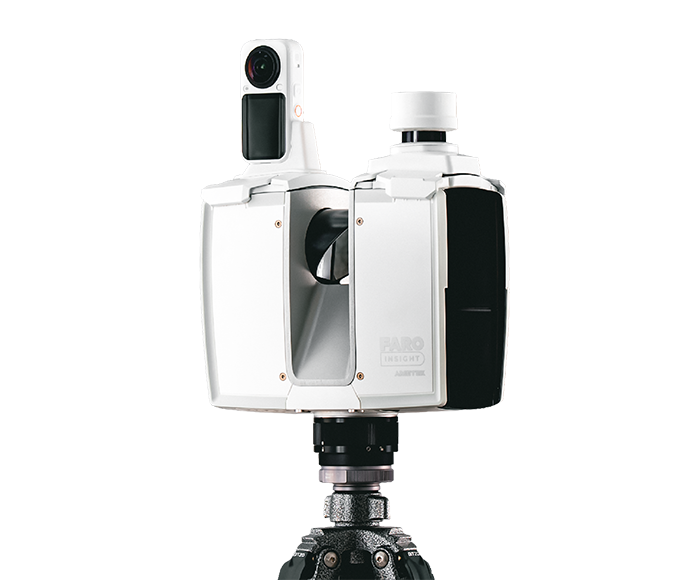
The concept becomes particularly powerful when 3D laser scanning, point clouds, BIM, GIS, and digital twins are incorporated into the workflow. A physical facility can be captured digitally, its geometry can be converted into structured information, and individual assets can be associated with locations, classifications, specifications, and operational information. For large and complicated facilities, this can make asset information significantly easier to access. Imagine a maintenance engineer trying to identify a pump in a large industrial facility. Instead of searching through old drawings or walking through multiple plant areas, a spatially organized digital environment can help locate the asset and connect it with relevant information. This is the larger opportunity behind modern digital asset management: turning physical infrastructure into searchable, structured, location-aware digital information. For VB Terrascan, this approach aligns naturally with its reality-capture capabilities, where the workflow moves from physical scanning to point clouds, BIM, and digital-twin applications.
What Is GRID Asset Management?
The term GRID Asset Management can be understood as an asset-management approach built around a structured spatial framework or digital grid in which physical assets are organized, identified, and connected to information. The exact implementation of a GRID platform can vary depending on the technology and project requirements, but the underlying principle is straightforward: assets become easier to manage when their identity, location, geometry, relationships, and associated information are connected.
Traditional asset management often relies on spreadsheets, PDF drawings, maintenance databases, photographs, equipment registers, and individual software systems. These tools can each contain valuable information, but they may not provide a unified view of where assets exist within the physical environment. Spatially connected asset management addresses this gap by linking digital information to the physical location of assets.
For example, an industrial pump can be represented as an asset with a unique ID, location, equipment type, manufacturer, maintenance information, and associated documents. When that information is connected to a 3D environment, the user can understand not only what the asset is, but also where it is and what surrounds it.
This becomes particularly useful when organizations manage large facilities containing thousands of assets.
GRID Asset Management vs Traditional Asset Management
Traditional asset management is often document-driven. Teams may maintain equipment registers, spreadsheets, CAD drawings, inspection reports, manuals, photographs, and maintenance schedules separately.
A modern digital approach attempts to connect those information sources.
| Traditional Asset Management | GRID / Digital Asset Management |
| Spreadsheet-based asset registers | Structured digital asset database |
| 2D drawings | Spatially connected digital environment |
| Manual asset searching | Location-based asset discovery |
| Separate photographs | Assets linked with visual information |
| Disconnected documents | Information associated with assets |
| Manual field verification | Reality-capture-supported verification |
| Static documentation | Digital information that can be updated |
| Limited 3D context | BIM / 3D / digital-twin context |
The objective is not necessarily to eliminate existing systems. Instead, GRID-based asset management can provide a spatial information layer that connects physical assets with the systems organizations already use.
Why Digital Asset Management Matters
Managing a large facility without reliable asset information can feel like trying to navigate a city without street signs. You may know the destination exists, but finding it, understanding its surroundings, and determining what information applies to it can take unnecessary time.
Large industrial plants, airports, hospitals, commercial properties, and infrastructure networks can contain thousands of physical assets. These may include HVAC equipment, pumps, valves, electrical panels, generators, transformers, fire-protection equipment, structural components, mechanical systems, and specialist machinery.
When information about these assets is incomplete, maintenance teams may spend valuable time locating equipment or verifying field conditions.
A digital asset-management environment can help create a more organized information structure. Assets can be associated with locations, categories, identifiers, documentation, and other relevant information.
The result can be a more useful digital representation of the physical facility.
This is particularly valuable when employees change, facilities expand, or older documentation becomes difficult to interpret. Instead of relying entirely on institutional memory